A sweeping new study is adding fresh urgency to football's long-running brain health debate, finding that NFL players are nearly four times more likely to die from neurodegenerative diseases than the general population.
Published in eClinicalMedicine, the research examined the health records of 19,824 NFL players who appeared in league games between 1960 and 2019. While former players were less likely to die overall than the average American, researchers found they were 3.8 times more likely to die from dementia, 3.88 times more likely to die from Parkinson's disease, and nearly four times more likely to die from neurodegenerative illnesses overall. The risk remained roughly three times higher even after accounting for other known health factors.
"This is the clearest population-level evidence we have ever had that NFL players are dying due to neurodegenerative disease at real and measurably higher rates," said Dr. Daniel Daneshvar, chair of Physical Medicine and Rehabilitation at Mass General Brigham and one of the study's senior authors. "NFL players are dying of dementia and Parkinson's disease three to four times more often than they should."
Researchers also found that career length mattered. Players who spent five or more seasons in the league faced nearly double the risk of neurodegenerative death compared with those whose careers lasted one to four seasons.
Among players who died before age 60, neurodegenerative mortality was more than 12 times higher than expected.
The study introduced the Selection Through Athletic Resilience Survivor (STARS) effect, arguing that NFL players generally live longer because they're healthier than the average person—making the spike in brain disease even more striking.
Dr. Jesse Mez, co-senior author of the new study, said the broader findings reinforce what researchers have increasingly observed. "A fourfold increase in dementia rates from a presumed environmental cause is immense—and brain bank studies indicate that CTE is the primary explanation," he said.
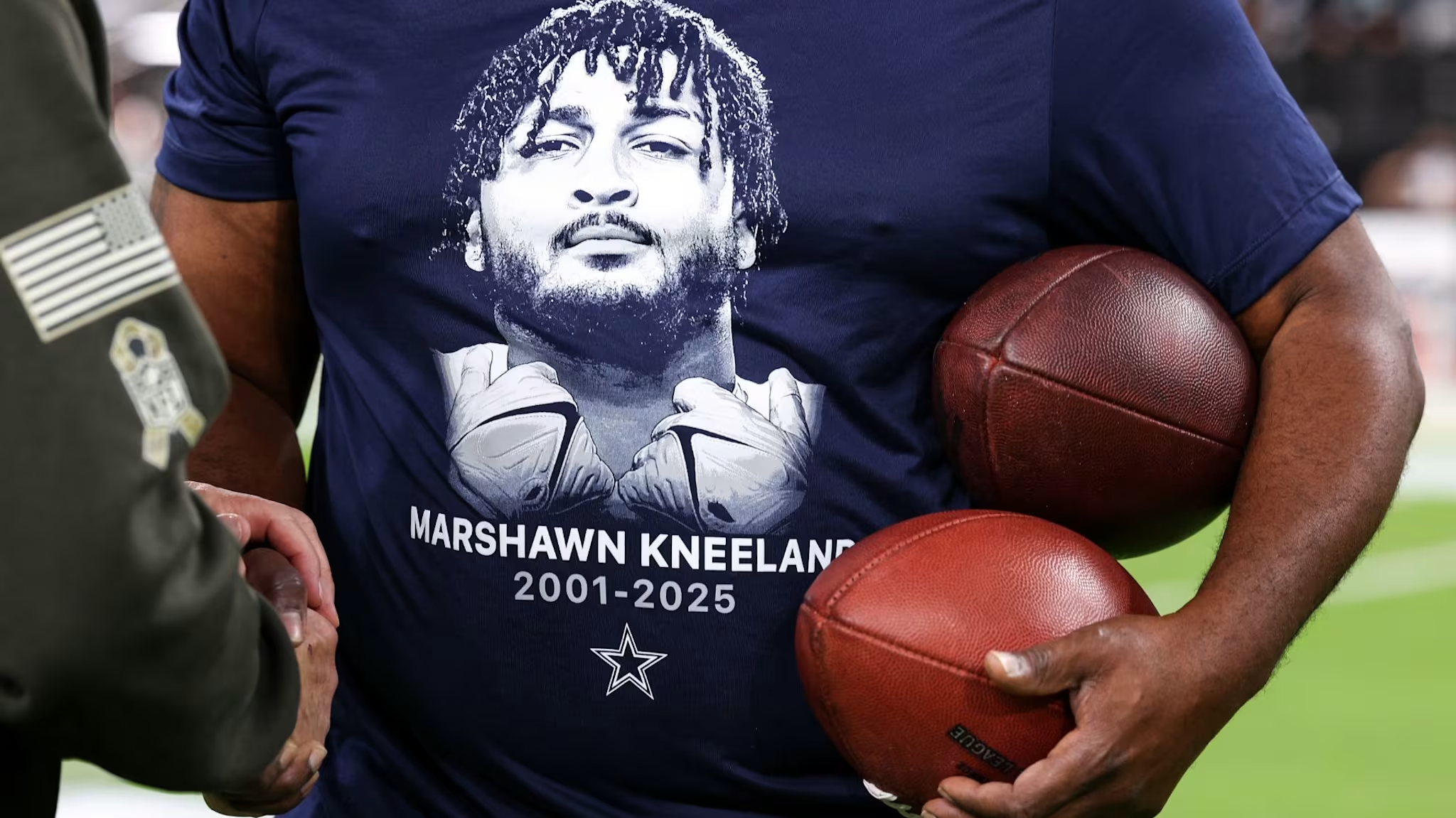
The report lands as the football community continues to process Kneeland's death. The 24-year-old defensive end died in November 2025 from an apparent self-inflicted gunshot wound after a police pursuit in North Texas, just two days after scoring the first touchdown of his NFL career.
Earlier this week, doctors at the Boston University CTE Center confirmed that post-mortem testing found Stage 1 CTE in his brain. Because CTE can only be diagnosed after death, researchers examined his brain tissue following his passing.
Kneeland's girlfriend, Catalina Mancera, said the diagnosis offered perspective on what he may have been experiencing. "While this diagnosis does not change the tragedy of his passing, it provides important context about some of the struggles he may have been facing," she said.
If you or someone you know is struggling with thoughts of self-harm or suicidal ideation, help is available. Call or text 988 or visit 988lifeline.org to connect with a trained crisis counselor 24 hours a day, seven days a week.