Key Takeaways
- Complex ranks the 50 best R&B albums of the 2000s, tracing a decade that moved from neo-soul musicianship to rap crossover dominance and dance-pop experimentation.
- D’Angelo’s Voodoo set an early creative benchmark, while Usher’s 2004 chart takeover and Beyoncé’s solo breakout helped define the genre’s commercial peak.
- The selection spans 2000–09, including Mariah Carey’s comeback and The-Dream’s groundwork for the moody, atmospheric R&B that would shape the next decade.
Less than a month into the 2000s, the decade got its first great R&B album: On Jan. 25, 2000, D’Angelo released his sophomore album, Voodoo. Nearly 10 years later, on Dec. 21, 2009, Mary J. Blige closed the decade out with Stronger with Each Tear, one of her poppier efforts, led by a single featuring Drake.
That’s a fitting beginning and end for a decade that transformed R&B, one where it seemed like every few months a new faction was leading the genre, commercially and creatively. Voodoo was a neo-soul classic, a shining example of how musicianship and homage to the past can still lead somewhere fresh. But neo-soul wouldn’t become the genre’s dominant sound. Instead, rap and R&B grew closer, and both boomed commercially.
It all culminated in 2004, when, amid a full-on southern takeover, rap and R&B ruled the Billboard charts in unprecedented fashion. At the center of it was Usher, who spent 28 weeks, more than half the year, at No. 1 on the Hot 100, with Jermaine Dupri shaping the sound behind most of that run.
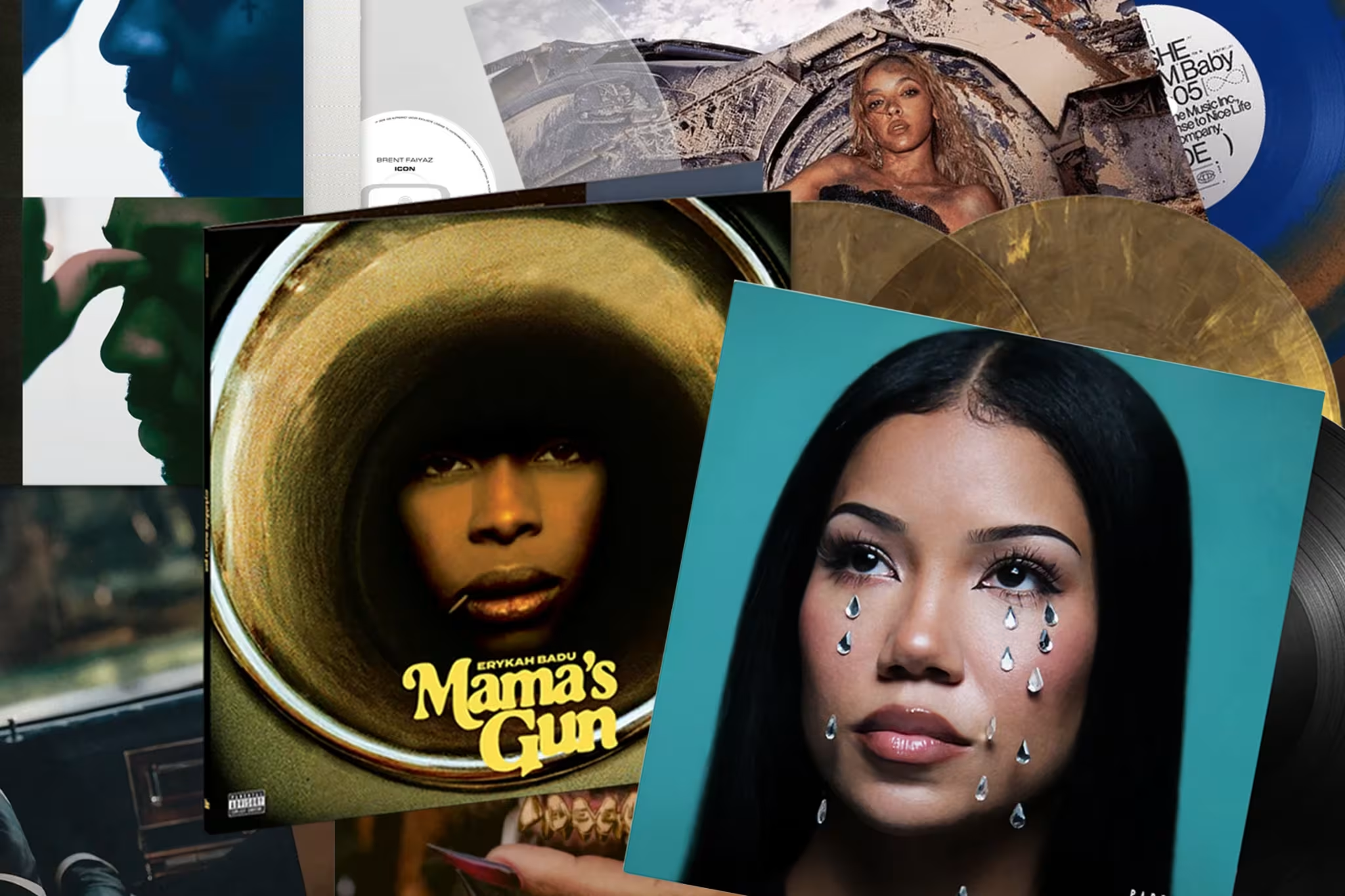
Shop R&B on Complex
 Mama's Gun (25th Anniversary Gold Black Ice 2LP)$39.98
 Giveon - Beloved: Act II [VINYL LP]$34.98
 HEAVY IS THE CROWN (STANDARD CD)$10
 MUTT Deluxe: HEEL Standard Translucent Ruby Vinyl$37.99
 Fix Your Face LP$33
 "Love is the New Gangsta" Moonlight Clear Signed Vinyl$35
 Vacancy Store Exclusive Vinyl$40
 Finally Over It: For Worse Edition - Galaxy Vinyl$39.98
 PHOLKS EP Vinyl$25.99
 Sail Out Limited Edition Picture Disc LP$35.98
 Baduizm 2LP$32.99
 Summer Walker "Over It" 5 Year Anniversary Vinyl$40
By the end of the decade, rap’s grip on R&B had loosened, and the genre grew more pop-centered, from Ne-Yo’s Stargate-produced “Closer” to Chris Brown’s “Forever,” with even Usher heading toward the Las Vegas-based dance floor. There was still music for the lovers, but commercially, this was no longer a genre ruled by ballads and vocal runs.
At the same time, records like Kanye West’s 808s & Heartbreak and The-Dream’s Love/Hate were planting the seeds for the moody, atmospheric R&B that would define the next decade. In a lot of ways, the first half of the 2000s was stronger, with more musicianship and more stars putting out the best work of their careers.
Still, it was an eventful decade, one worth documenting, from Beyoncé going solo to Usher’s dominance to Mariah Carey’s comeback to Chris Brown’s rise.
Here are the 50 best R&B albums of the 2000s.
Michael Jackson, Invincible (2001)
Label: Epic
Michael Jackson’s Invincible, the last studio album he released in his lifetime, arrived as a futuristic blend of R&B, pop, and electronic production.
From the silky seductiveness of “Butterflies” to the infectious bounce of “You Rock My World,” the King of Pop proved that he could still keep up with the genre’s stuttering, turn-of-the-millennium sound.
This was largely due to the work of Rodney Jerkins, who gave Jackson a new soundscape to play in. Though partially stifled by tension with his label, Sony, Invincible remains an ambitious late-career statement. —Cydney Lee
Craig David, Born to Do It (2000)
Label: Wildstar (UK) / Atlantic (US)
Craig David first made noise as a teenager, the lead vocalist on Artful Dodger’s two-step classic “Re-Rewind (The Crowd Say Bo Selecta),” name-dropping himself while introducing much of the world to UK garage.
But when his debut, Born to Do It, arrived (in 2000 in the UK, 2001 in the US), he became less indebted to UK club culture and embraced contemporary US R&B. The Ginuwines, R. Kellys, and Dru Hills were all on his mind on his debut. But David is a gifted performer, one who lets his confidence and swagger do the work, like on the classic “7 Days” or the dramatic deep cut “Can’t Be Messin’ ’Round.” —Dimas Sanfiorenzo
Van Hunt, Van Hunt (2004)
Label: Capitol
In 2026, I can only be so sorry that Van Hunt is best recognized as the reason Halle Berry says she’s “juicy like a peach.”
As Berry’s betrothed, he’s a lucky guy. But he’s also a very talented artist, and his self-titled debut remains an underappreciated gem of the 2000s. Credited on multiple instruments in addition to writing and producing, the Ohio player (he’s from Dayton) demonstrated his chops and his appreciation for greats like Prince and Junie Morrison on an album that, in the words of the New York Times’ Jon Pareles, was “more about eccentricity than about nostalgia.”
The Grammy-nominated lead single “Dust” is musically breezy, but the lyrics point to dysfunction: “It's just another ray of merciful hope/I don't expect many more.” He’s not talking about some Twitter-cliche toxic relationship, though, he’s sharing his own mess. “Down Here in Hell (With You)” deepens the feeling, resulting in a winning examination of misery. Listening to today’s men, you might get the idea that R&B is only about sneering, dirty macking. It’s for the wounded, too. —Ross Scarano
John Legend, Once Again (2006)
Label: GOOD Music / Sony Urban Music / Columbia
Parts of John Legend’s debut album, Get Lifted, play like a fuckboy manifesto — philanderer sonnets sung to lush instrumentation.
On the follow-up, Once Again, he tries a little tenderness. One moment he’s peering through googly heart eyes (“P.D.A. (We Just Don’t Care)”), the next he sorts through toxic relationship wreckage (“Another Again”). This breezy sophomore album expands Legend’s musical palette, pairing will.i.am’s stuttering drums (“Each Day Gets Better”) with Devo Springsteen and Tom Craskey’s rolling guitar licks (“Stereo”) and one of Kanye West’s finest sample chops of the era (“Heaven”).
It’s a snapshot of a soul man doing the work, both in romance and the recording booth. —John Kennedy
Anthony Hamilton, Comin' From Where I'm From (2003)
Label: So So Def / Arista
If "down-home" had a voice, it would sound like Anthony Hamilton. Or more precisely, any song on his aptly titled debut album, Comin' From Where I'm From, a bluesy expanse of neo-soul that sticks to your ribs like some barbecue.
Between his world-weary croak and the southern-fried bass guitar, the title track takes you from your living room to his grandmother's North Carolina back porch. Meanwhile, “Charlene” is a mournful plea from an imperfect, desperate lover. Intimate, soulful, and unashamedly southern, Hamilton’s debut is country anthropology from the heart. —Peter A. Berry
Angie Stone, Mahogany Soul (2001)
Label: J Records
Angie Stone was in her late 30s when she broke through after years working behind the scenes and released her debut album, Black Diamond. It would take two years and a label change for her to release her masterpiece. Mahogany Soul presented a mature, fully developed woman; this was music based on experience, of course. And the album drew from a Murderers’ Row of producers in contemporary R&B, some expected (Raphael Saadiq), others unexpected (Swizz Beatz).
Like a lot of neo-soul, it was positioned as a counter to the overcommercialized elements of R&B. In the wake of man-skeptical anthems like “He Wasn’t Man Enough” and “Bills, Bills, Bills,” here was the single “Brotha,” a completely earnest and unapologetic ode to loving the Black man. —Dimas Sanfiorenzo
Raphael Saadiq, Instant Vintage (2002)
Label: Pookie / Universal
Raphael Saadiq was a mainstay in the music industry when Instant Vintage dropped in 2002, but his first solo effort felt like a new statement for the songwriter and producer.
His first album after Tony! Toni! Toné! and a stint with the supergroup Lucy Pearl was a one-man showcase, a master musician showing his repertoire in all aspects of the music-making process and making something that was centered in soul and not chasing contemporary pop sounds.
The album bricked commercially, despite having the searing D’Angelo collaboration “Be Here” and “Still Ray,” which interpolates the Dr. Dre classic it’s named after. Saadiq seemed comfortable trading commercial success for artistic fulfillment. “I wanted to make the best record possible for me,” he told Pitchfork in 2017. “After that, I fell back into being just like a jazz musician—I made music only for me.” —Will Schube
Lloyd, Street Love (2007)
Label: The Inc. / Universal Motown
Three years after jumping into the game with baby-faced love songs like “Southside,” Lloyd returned with the slightly more grown-man-ish Street Love. And it’s an improvement. Everyone will rightfully remember the Lil Wayne-assisted “You,” but with their redemptive lyrics and even more naked tenderness, tracks like the title song and “Player’s Prayer” are somehow more potent. When you mix in the sleek dance pop of “Get It Shawty,” you’re looking at the ultimate prom night soundtrack for your favorite core millennial—whether it’s for slow dancing, awkward grinding, or everything in between. —Peter A. Berry
Trey Songz, Ready (2009)
Label: Songbook / Atlantic
On “Wonder Woman,” Trey Songz famously said, “I gave you prophecy on my first joint/Y'all lamed out/They ain't really appreciate it until the seconds one’s out.”
Well, truth be told, they didn’t really appreciate the second one either.
It wasn’t until his third album, Ready, that Trey Songz the hitmaker was born. It took a minute. When he arrived in the mid-2000s, there was no shortage of knockoff R. Kelly types: here was a new braided one telling soulful stories of making it out of the hood.
On the follow-up, he might have skewed too far into radio territory too quickly. He found a healthier mix on Ready, the album where he fully embraced his heartthrob persona. The cover, with him shirtless and staring straight into the camera, says it all. So does the big breakout single, “I Invented Sex,” his vivid ode to putting it down in the bedroom. —Dimas Sanfiorenzo
Erykah Badu, New Amerykah Part One (4th World War) (2008)
Label: Universal Motown
By the late 2000s, some of her peers were striding happily into the wax museum of Motown pastiche, but not Erykah Badu, who chose autobiographical detail on New Amerykah Part One. “This year, I turned 36/Damn, it seems it came so quick,” she sings on “Me,” one of the most beautifully ruminative songs in her catalog. “Will I escape this vanity?/Or will I keep on smoking trees?”
She worked with rap producers like Madlib and 9th Wonder, in addition to more neo-soul-coded collaborators, to make an album of deep feeling and wisdom. When she reflects on the end of life in “Telephone,” she leaves you with a lump in your throat while you also marvel that she’s resisted producing a maudlin weepie. And “Master Teacher,” co-written with Georgia Anne Muldrow, has only grown in esteem and influence in the years since, with its refrain of “I stay woke.”
Badu earned the title. —Ross Scarano
Teedra Moses, Complex Simplicity (2004)
Label: TVT
Teedra Moses’ debut is the definition of a cult classic. Released in the summer of 2004—arguably the most prosperous time to be an R&B artist—the album flopped, debuting at No. 168 on the Billboard 200. (She wouldn’t release an official follow-up until 11 years later.) But the lack of commercial success never defined the album, which was a showcase for Teedra and producer Paul Poli, who’s full of tricks, like turning the triumphant horns of OutKast’s “SpottieOttieDopaliscious” into something sinister on “No More Tears,” or making Rakim’s “My Melody” sound like a futuristic club banger on “Doin’ You.”
The real standout is Teedra, who finds ways to subvert standard R&B fare. On “Be Your Girl” she plays the catcaller; while on “Backstroke” where she’s the one who admits she can’t shake a toxic love because of his pipe game. —Dimas Sanfiorenzo
Mary J. Blige, No More Drama (2001)
Label: MCA
At the top of 2001, Mary J. Blige turned 30.
A milestone like that tends to make people reflective, and for Blige, the reflection became a declaration: it was time to shed the struggles of the past decade, from toxic relationships to drugs. Her release came in the form of “Family Affair,” a subwoofer-rattling Dr. Dre banger and the most outwardly commercial single of her career.
No More Drama arrived right after the more traditional soul of Mary. And it’s not just “Family Affair.” There’s the Police-sampling “Dance for Me,” the classic Neptunes sound of “Steal Away,” and the Windows 95 synths Swizz Beatz brings to “Where I’ve Been.” Even the album’s centerpiece, the dramatic title-track ballad, is built on a flip of The Young and the Restless theme, making it powerful and instantly recognizable at the same time. —Dimas Sanfiorenzo
Amerie, All I Have (2002)
Label: Rise / Columbia
All I Have marked the debut of two artists who’d help define the decade’s R&B: Amerie, with her airy, understated vocals, and producer Rich Harrison, who pulled from the D.C. go-go that raised him. They recorded most of it in his basement when they were both unknown, giving the album an almost lo-fi, live-session quality. When the album is grooving, shit is hard to beat, the jazzy “Why Don’t We Fall in Love,” an all-time summer yearning anthem or the cool, jittering sounds of “I Just Died.” —Dimas Sanfiorenzo
Alicia Keys, Songs in A Minor (2001)
Label: J Records
The first time R&B lovers met Alicia Keys, she was going to jail.
The music video for the No. 1 single “Fallin’”—which depicted the singer taking an up-north trip to visit an incarcerated lover—portrayed the braided New Yorker as an around-the-way stunner with a prodigious piano game.
And A.K.’s debut album proved J Records’ breakout rookie was somehow even more dynamic. Rooted in the piano-led soul tradition but fluent in contemporary R&B, Songs in A Minor bridges Ol’ Dirty Bastard (“Girlfriend”), Maya Angelou (“Caged Bird”), and Prince (“How Come You Don’t Call Me”). Long before social media debates over who is “the prize” in a relationship, Alicia Keys was preaching self-respect on “A Woman’s Worth.” There are timeless love ballads (“Butterflyz”), survival-mode vents (“The Life”), and a Jimmy Cozier duet about temptation (“Mr. Man”), all delivered with range and realness. Not even the warden could lock this one-of-one superstar in a box. —John Kennedy
Bilal, 1st Born Second (2001)
Label: Interscope
Back when Bilal dropped 1st Born Second in 2001, rap and R&B were two branches of the same tree. The Soulquarians, the collective led by Questlove, D’Angelo, and Jay Dee, helped firm up the bond between the two genres, and artists like Bilal ran with it. On his debut, the Philly singer threads those worlds into a brilliant whole, pulling in producers like Megahertz and Dr. Dre, whose almost psychedelic, electric backdrops on “For You” and “Fast Lane” help flesh out a sound that fuses rap’s boom bap with R&B’s sultry undercurrent. It’s a deft, dynamic hybrid, often imitated but rarely matched. —Will Schube
Brandy, Full Moon (2002)
Label: Atlantic
When Full Moon arrived in March 2002, it caught Brandy at a curious point in her career. She was arguably better known as an actor, with Moesha having just wrapped its six-season run, and it had been nearly four years since the monster success of her sophomore album, Never Say Never.
She was 19 when that album dropped; by Full Moon, she was drinking age, making this her first truly grown-up album. She got the gang back together—aka Rodney Jerkins—but what they made this time was darker, sparer, and more industrial, pulling from the moody, Afrofuturist R&B that dominated radio in the Y2K years.
Brandy admitted as much, telling Billboard in 2022, “[Aaliyah and Timbaland] were our biggest inspirations. Rodney will tell you that Timbaland is one of his favorite producers. I will tell you the same thing. Aaliyah, her tone, and she stacked vocals, too.” She went on to call album highlight “Anybody” an Aaliyah song.
She wouldn’t make fans wait four years for the next one, either. On 2004’s Afrodisiac, she went straight to the source, with Timbaland producing most of the record. —Kat Sanchez
Chris Brown, Chris Brown (2005)
Label: Jive
Before there was Bris Breezy, there was simply Chris Brown, and for what it’s worth, he was incredible.
Just peep his self-titled debut album. The LP features an artist who’s remarkably complete—if transparently manufactured—teenybopper. With its crunk synths and peak Juelz Santana guest spot, “Run It!” is the pinnacle of your big brother’s middle school dance. Depending on how old you are, "Yo (Excuse Me Miss)" was the song you wished you could sing to your eighth-grade. crush. “Say Goodbye” is the song your big sis played after Jevon broke up with her in study hall.
Happy, hopeful, and for at least one song, mournful, Chris Brown packages all the multitudes of a young love in just about an hour. —Peter A. Berry
Maxwell, BLACKsummers'night (2009)
Label: Columbia
Maxwell’s 2009 classic, which he self-produced under the name MUSZE alongside Hod David, took six years to make, but I don’t think anyone involved would say the grueling experience wasn’t worth it. BLACKsummers’night is a dedication to classic soul and R&B, an album backed by a live, at times off-the-cuff, jazzy band, making music that was a 180 from his most commercial effort, the sleek-sounding Now.
What’s ironic, of course, is that Maxwell’s uncompromising, emotional album ended up being one of the biggest of his career. It debuted at No. 1 on the Billboard 200 with his highest first-week sales ever, and the single “Pretty Wings” would become maybe the defining song in his catalog. —Will Schube
Joe, My Name Is Joe (2000)
Label: Jive
In an era where commercial male R&B singers were either embracing their inner thug&B or making heartbroken classics, along comes Joe: with maybe the most romantic R&B album of the early 2000s.
With the exception of “Stutter,” which is a twisty tale of infidelity, My Name Is Joe is pure romance, a light-a-candle album that you can let ride. You already know about singles like “I Wanna Know” and “Treat Her Like a Lady” which are beloved simp anthems. But even album cuts like “Table for Two” and “One Life Stand” are for the lovers—songs where Joe wisely shies away from the theatrics he’s capable of to make perfect in-the-mood music. —Dimas Sanfiorenzo
Jazmine Sullivan, Fearless (2008)
Label: J Records
Jazmine Sullivan reached a whole new audience with her celebrated 2021 LP Heaux Tales, but real heads know it all began with Fearless, a delightfully entertaining ode to angry retribution and getting even with ex-lovers. “Bust Your Windows“ is one of the best album openers in the history of R&B, as Jazmine immediately offers insight into her personality as a lyricist: “I bust the windows out your car/ And, no, it didn't mend my broken heart/I'll probably always have these ugly scars/But right now I don't care about that part.” —Will Schube
Musiq, Juslisen (2002)
Label: Def Soul
Yes, “Just Friends (Sunny)” was cute and “Love” is a touching ballad, but there was a whiff of one-album wonder with Musiq Soulchild, who didn’t have the sleek physique or demeanor of most leading men at the time. So on the follow-up, Juslisen, he got serious—dropped the “Soulchild” from his name—and released an album centered on the charms of being a regular dude trying to navigate relationships.
The single “Halfcrazy” is the sequel to “Just Friends (Sunny)”: a friendship turned sexual, and now there’s tension. Meanwhile, the funky “Newness,” driven by a sample flip similar to Jay-Z’s “Politics as Usual,” is all about the pre-situationship portion of courting a lover, which might not be reciprocal. This was one of the secrets of Musiq, who made neo-soul but didn’t get weighed down by the social baggage of the music.
That doesn’t mean his songs were frivolous; it was all filtered through the personal. “Motherfather” is a gorgeous tribute to his parents, while on “Future” he’s talking to a mystery listener about not giving up. “Ain't nothing worse than to have someone tell you to grow up/And give up on your dreams,” he sings. He might be talking to himself. —Dimas Sanfiorenzo
112, Part III (2001)
Label: Bad Boy / Arista
The year 2001 was a turbulent one for Bad Boy, dominated by the news coverage around Diddy’s shooting trial. On 112’s Part III, the famously hammy Puffy is barely seen. Instead, the album is a self-contained series of bops, produced mostly by group member Daron Jones, that tries to play the club harder than any of their ’90s work. The best songs on the album have this upbeat, carefree energy, from the cheeky “Peaches & Cream” and “Dance With Me” to the Timbaland-inspired chase anthem “Caught Up.” —Dimas Sanfiorenzo
Ciara, Goodies (2004)
Label: Sho’nuff / LaFace
Back when Lil Jon & The East Side Boyz’s raucous records rang out from the window to the wall, Ciara put on her tiara and offered a softer side of club-ready crunk music.
And while the label “crunk&B” sounds hella gimmicky, Goodies is no novelty act. The Atlanta singer’s first album is a portrait of an 18-year-old stepping into womanhood, navigating young love and lust over intergalactic synth zaps and voluptuous 808s. CiCi sings about wanting to be claimed (“The Title”), hometown pride (“Oh”), and, yes, keeping scrubs far away from her precious goodies (the chart-topping title track, produced by the King of Crunk himself). You can’t discuss ATL’s mid-2000s explosion without mentioning Goodies, a sweet treat that goes hard but will never go stale. —John Kennedy
Jaheim, Ghetto Love (2001)
Label: Divine Mill / Warner Bros.
It is a dirty shame that contemporary R&B can’t seem to make room for a brawny, full-bodied loverman voice like Jaheim’s, a rightful heir to the roughly textured panty-dropping style of Teddy Pendergrass. His platinum-selling debut, Ghetto Love, managed to take that level of bearded machismo to radio, with hits like the slick-talking “Could It Be,” the romantically fatalistic “Just in Case,” and the perfect ballad “Anything.” The deep cuts are exemplary too, especially the swooning “Waitin’ on You” with Miss Jones. —Ross Scarano
Keyshia Cole, Just Like You (2007)
Label: Imani / Geffen
“Let It Go” is a helluva way to open an album. Flanked by Missy Elliott and Lil’ Kim, Keyshia delivers an empowerment anthem telling women everywhere to cut the dead weight: “If he ain't gonna love you the way he should/Then let it go.”
In many ways, it’s the quintessential Keyshia Cole record. She’d picked up the mantle from Mary J. Blige as R&B’s voice of the luckless lover, and she had the pipes to match. Most of Just Like You deals in deceit and betrayal, so if you loved her debut, The Way It Is (and you should), you know the terrain.
The difference is the production; her debut leaned on hip-hop beats and breaks—Just Like You is lush and orchestral. The highlight is the guitar-led “Heaven Sent,” a rare moment of hope on an album steeped in hurt. —Will Schube
Destiny's Child, Destiny Fulfilled (2004)
Label: Columbia
Beyoncé once likened Destiny’s Child’s final studio album to a musical. And the comparison checks out. Destiny Fulfilled is a rare unpretentious concept record that chronicles the rose-colored devotion (“Cater 2 U”) and crushing crashouts (“Is She the Reason”) of a romantic relationship. That narrative arc is shaded by of-the-era bops like the percussive “Lose My Breath” and the Lil Wayne- and T.I.-assisted “Soldier,” plus crate-digging gems courtesy of producer 9th Wonder (“Girl”).
In the end, Bey, Kelly Rowland, and Michelle Williams—sharing the spotlight more evenly than on previous group albums—celebrate the power of sisterhood and self-love in a performance that deserves a bow. —John Kennedy
Justin Timberlake, Justified (2002)
Label: Jive
I won’t say they were right or wrong, but there was a time when Justin Timberlake was compared to Michael Jackson. He had the reedy voice, some of the dance moves, and some killer songwriting behind him, and like Mike, he departed his boy band before he ascended to solo superstardom.
So Justified might be considered something like Justin’s Off the Wall, a virtuosic project coated in slow jams, soul-baring love songs, and horny dance cuts. Beginning with tracks like the Clipse-assisted “Like I Love You,” JT proved he had the vocal charisma and singer-producer synthesis to carry him to a top 15 slot on the Billboard Hot 100 chart. With its futuristic guitar layers, “Rock Your Body” is quirky dancefloor euphoria. The foggy “Cry Me a River” is something like the total opposite of that.
There’s serious range here, and you have to give the Neptunes and Timbaland credit for rendering Timberlake’s talent to its fullest effect. Maybe JT was never the King of Pop, but depending on how nostalgic you are—or simply, how old you are—you might say the comparison was at least … well, justified. —Peter A. Berry
Beyoncé, Dangerously in Love (2003)
Label: Columbia
Before she was essentially omnipotent, Beyoncé had to prove herself as a solo artist. Twenty-three years after its release, it feels safe to say Dangerously in Love did the job.
From start to finish, the LP served up the very best from all across the pop-R&B diaspora. Laced with HBCU band-esque percussion and an effortless verse from her future hubby, “Crazy in Love” is a lover’s anthem fit for homecoming or the center of the dance floor. Aside from being at the center of a hilarious Jay-Z GIF, the Sean Paul-assisted “Baby Boy” is an apex exercise in sensuous dancehall bliss. “Me, Myself and I” is your favorite thug’s favorite Beyoncé song. —Peter A. Berry
The-Dream, Love/Hate (2007)
Label: Radio Killa / Def Jam
There was a minute there where The-Dream was the future. No one was making R&B like him, and few had the imagination to see where the genre was going like he did. Love/Hate is the best amalgamation of this vision, a daring, quirky, weird, and brilliant foray into the rich history of Black popular music.
After spending a significant amount of his career writing for others, The-Dream saw this as his opportunity to showcase his chops. “I felt like I needed to take full advantage of where I was at that time in my career. I didn’t want to wait for Usher, Chris Brown, Beyoncé, or Rihanna to sing my songs,” he said to Billboard back in 2017. —Will Schube
Carl Thomas, Emotional (2000)
Label: Bad Boy / Arista
There’s a reason Carl Thomas’ Emotional wardrobe styling has become a meme. Like the sweater the former Bad Boy singer sports on the cover, this Y2K debut is cozy AF—a mature, emotionally available alternative to the posturing and shiny-suit swagger his label was previously known for.
That man was yearning! You can hear it on “My Valentine,” on “Giving You All My Love,” and on “I Wish,” a sneaky-link tragedy. The Notorious B.I.G.-sampling “Woke Up in the Morning” carries on Bad Boy’s hip-hop tradition and lineage, but Emotional runs on warm mid-tempo grooves like “Summer Rain” and its title track, giving R&B heads an outlet for big feelings and ribbed knitwear a whole new identity. —John Kennedy
Faith Evans, Faithfully (2001)
Label: Bad Boy / Arista
Despite getting production from forward-thinking, modern-day hitmakers like the Neptunes and Battlecat, Faith’s third album, Faithfully, had a decidedly old-school, smoky energy.
The album was melancholy and ballad-led, with production that pulled from soul records. An important part of making this album was Faith and her then-husband and manager, Todd Russaw, just listening to a bunch of old records, getting what she would later call a “music education.” Which, sure, but much of the album was just Faith reworking samples rappers had already used (this is a compliment).
Some are obvious, like Faith honoring Biggie by singing over the “Who Shot Ya” sample on “Alone in This World” and the “Juicy” sample on the title track. Others are deeper cuts, like using the same source as OutKast’s “Mainstream” on “Don’t Cry” or Mobb Deep’s “Give Up the Goods” on “Heaven Only Knows.” Whatever the reason, Faith sounds inspired by these choices—her vocal performances studded with her signature power flourishes. —Dimas Sanfiorenzo
Janet Jackson, All for You (2001)
Label: Virgin
Janet Jackson’s sixth studio album, The Velvet Rope, was the heaviest album of her career, one powered by a trip-hop coolness and centered on themes like depression and self-worth. The follow-up, All for You, arrived amid turmoil but sounded like a burst of sunshine. This is a divorce album (her husband, René Elizondo Jr., filed for divorce in 2000), but not one about grief. Jimmy Jam and Terry Lewis again do much of the heavy lifting. The result is cheery pop music, an eclectic mix of bright synths, hopeful guitar licks, and optimistic piano riffs. It creates a soundscape that’s warm and nostalgic, in a way that feels like the bizarro version of the dark, jittery sounds Timbaland was making with Aaliyah.
But even as you can feel the lightness in the music, it’s in the lyrics where you see the most conflict. For every song like “Someone to Call My Lover,” which is basically about the joys of pre-app dating, you have the rock-inspired “Trust a Try” or “Son of a Gun (I Betcha Think This Song Is About You),” which are direct shots. Janet contains multitudes. —Dimas Sanfiorenzo
T-Pain, Epiphany (2007)
Label: Konvict Muzik / Nappy Boy / Jive
T-Pain rewired what an R&B singer should sound like. And by the time we got his sophomore album, Epiphany, with its ubiquitous Auto-Tuned hits like “Bartender” and “Buy U a Drank,” it was clear Pain wasn’t a one-vocal-trick pony.
Beneath the computer-enhanced warble, we’re left with a gifted songwriter with an instinct for flirty hooks and larger-than-life songs fit for the club and the bedroom alike. Even as the self-proclaimed “Rappa Ternt Sanga” blurred the lines between rapper and crooner, the Tallahassee artist never lost sight of his winning formula: a chorus you can’t shake. —Cydney Lee
Jill Scott, Who Is Jill Scott? Words and Sounds Vol. 1 (2000)
Label: Hidden Beach / Epic
Who is Jill Scott? Well, she has a thing with first impressions. When a fellow poet tried to introduce her to Questlove at an open mic, she cut in by belting Jodeci’s “Freek’n You” from the back of the room.
She was still more a poet than a songwriter, but that moment would lead to her co-writing the Roots’ “You Got Me,” and then to her great debut, Who Is Jill Scott? Words and Sounds Vol. 1. This might be the most Philly album of all time, stunning in how it uses live musicianship, strings, and woodwinds, all in service of a sound built around her poetic ways.
For all the finger-snapping reputation neo-soul artists had, this was one of the few albums to truly weave spoken word throughout. Her debut was an old-school slow burn, entering at No. 168 on the Billboard 200 before steadily climbing into the Top 20, helped along by “A Long Walk,” a song that’s as reflective and unhurried…as a long walk. —Dimas Sanfiorenzo
Ne-Yo, In My Own Words (2006)
Label: Def Jam
The buzz around Ne-Yo had been building since he penned Mario’s “Let Me Love You,” a career-changing No. 1 hit. It was enough to solidify his bona fides as a songwriter. And yet, when rolling out the debut, Def Jam ran the old playbook and went with the club song “Stay,” which featured a verse from Peedi Peedi.
But it wasn’t the song. That would come with “So Sick,” a masterfully weary, modern-day R&B classic. You can see the ability he had with his pen: Who can’t relate to the melancholy of being bombarded with love songs after a breakup, almost as if the universe is telling you something? Really, the aptly titled In My Own Words is full of these moments. It might be the best-written R&B album of the 2000s. Ne-Yo’s strength wasn’t abstraction but literal, relatable, image-driven storytelling. Take “When You’re Mad,” for example, where Ne-Yo manages to turn relationship tension into something playful and endearing. He sings: Could it be the little wrinkle over your nose/When you make your angry face/That makes me wanna just take off all your clothes/And sex you all over the place.” —Kat Sanchez
Aaliyah, Aaliyah (2001)
Label: Blackground / Virgin
Aaliyah’s third album will always carry a bittersweet feeling. It was released just over a month before she was killed in a plane crash, which happened shortly after she filmed the video for “Rock the Boat.” Musically, though, her self-titled LP showcased a singer who was in the middle of a transition. It was clear she was ready to step out of the Timbaland and Missy cocoon.
Timbo-produced songs like “We Need a Resolution” and “More Than a Woman” are timeless, but even more interesting is where she was taking her sound with other collaborators: the aforementioned lovemaking anthem “Rock the Boat,” the bugged-out “Loose Rap” with Static Major, the orchestral “I Refuse,” the serene-sounding “It’s Whatever.” It’s hard to listen to this album and not wonder what a follow-up could’ve sounded like. —Kat Sanchez
Jagged Edge, J.E. Heartbreak (2000)
Label: So So Def / Columbia
You can’t tell the story of modern-day R&B without Jermaine Dupri and So So Def, who somehow balanced a level of traditionalism with modern, hip-hop-based trends. Jagged Edge—who were heavy-handed with their allusions to New Edition, from their imagery down to the album title—ultimately set off the great R&B run JD and his main songwriting collaborator, Bryan-Michael Cox, would go on.
They almost perfected the setup of one ballad followed by something you can dance to. This is best exemplified by their single “Let’s Get Married,” a gorgeous ballad to lifelong partnership. The follow-up was the remix, and it was even bigger: Run of Run-DMC jumping on a version built on “It’s Like That.” One song is for the vows and one for the afterparty. —Dimas Sanfiorenzo
Amy Winehouse, Back to Black (2006)
Label: Island (UK) / Universal Republic (US)
Back to Black is one of the great what-ifs in recorded music. Instead of being a launching pad from which Winehouse would continue to redefine the modern pop landscape, it became a tragic farewell. Recorded with Mark Ronson, Salaam Remi, and the Dap-Kings, the LP took vintage soul and R&B and pulled it into the present, with Winehouse using those sounds to reflect on love, addiction, deceit, and betrayal. It also cracked the door open for the wave of British soul singers who followed, from Adele to Duffy. Back to Black remains a generational gift. —Will Schube
R. Kelly, TP-2.com (2000)
Label: Jive
Rarely is a musical sequel worth much. Typically, it’s an artist trying to recover from a low point, reaching back to a more memorable moment to prove they’re not washed. But R. Kelly’s TP-2.com, the sequel to his solo debut 12 Play, arrived on the heels of the blockbuster success of R. So in a sense, this was a victory lap. And he came back tougher. After making ballads with Celine Dion and writing the signature song for a Looney Tunes movie.” Kelly leaned all the way into the thug R&B image, portrayed best on “II Wish (Remix) [To the Homies That We Lost].”
Even if that’s the starting point, the range is still what stands out: he’s the heartbreaker (“I Don’t Mean It”) and the heartbroken (“I Mean (I Don’t Mean It)”), a storyteller (“A Woman’s Threat”), a gospel star (“The Storm Is Over Now”), a rap star (“Fiesta”), a romantic (“I Decided”), and a sleaze (“Like a Real Freak”).
The album is a landmark in another sense, too. It was the last time fans could pretend not to know about Kelly’s dark side. Weeks after its release, the Chicago Sun-Times published the first major investigation into abuse allegations against Kelly. —Dimas Sanfiorenzo
Usher, 8701 (2001)
Label: Arista
Usher has always had a knack for making messy situations sound good. On 8701, he traded his teenage-heartthrob baggage for grown-man drama, perfecting R&B that felt both intimate and club-ready. Singles like “U Remind Me” and “U Got It Bad” showcase a vocalist coming into his own, balancing falsetto finesse with the bruised vulnerability of a young man learning love the hard way. Then there’s “U Don’t Have to Call,” which flips post-breakup freedom into a bop. Most importantly, 8701 and Jermaine Dupri’s work on it laid the groundwork for the game-changer that arrived three years later: Confessions. —Cydney Lee
Justin Timberlake, FutureSex/LoveSounds (2006)
Label: Jive
Long story short, JT avoided the sophomore slump.
Slightly longer short story: FutureSex/LoveSounds succeeds through Timbaland’s space-age production, some bold risk-taking (having “SexyBack” as the lead single was kinda brave), and generally sharp curation that helps it soar past its predecessor. You could argue the T.I.-assisted “My Love” is even more indelible than “Rock Your Body.” The Billboard Hot 100, where it peaked at No. 1 (four spots higher than “Rock Your Body”), would agree with you. “Until the End of Time” ditches empty lovey-dovey platitudes for something sincere and serene, and as a whole, FutureSex/LoveSounds is inventive and rewarding rather than stale. —Peter A. Berry
Erykah Badu, Mama's Gun (2000)
Label: Motown
Mama’s Gun is the gift that keeps on giving. Seen as somewhat of a flop at its release—way more avant-garde than the accessible Baduizm, which was full of hits—Mama’s Gun has since been reframed as maybe the definitive neo-soul album, up there with Voodoo as the shit we show aliens when we want to showcase what real music sounds like.
The Soulquarians, and whatever they were cooking with at Electric Lady, are the backbone. The album doesn’t feature sing-with-your-chest hits like “On & On.” (The closest we get is “Bag Lady,” and really it’s the “Xxplosive” beat doing a lot of the work.) But this album is a true sonic adventure, best summarized in the epic 10-minute heartbreak suite “Green Eyes.” Badu went down a more eccentric path and never looked back. R&B didn’t either. Reflecting on the album’s impact in an interview with The FADER, she said she hears it in the music that came after it, and that it tickles her. “Oh my god, these are my kids,” she said. “These are what Mama’s Gun spat out.” —Will Schube
Sade, Lovers Rock (2000)
Label: Epic
Released after an eight-year hiatus, Sade’s fifth studio album is a masterclass in understated R&B, trading flashy production for smoky atmospheres, slow-burning grooves, and emotional precision.
From the aching tenderness of opener “By Your Side” to the reggae-infused “Slave Song,” each song flows into the next with grace, moving through love’s nuances while confronting slavery’s legacy and prejudice on tracks like “Immigrant.” Lovers Rock earned the English band a Grammy Award for Best Pop Vocal Album in 2002, and rightfully so. Lead singer Sade Adu’s velvet vocals command with warmth and quiet conviction, a subtle reminder that sometimes the softest voice can hit the hardest. —Cydney Lee
Ashanti, Ashanti (2002)
Label: Murder Inc. / Def Jam
For years, Ashanti was known as the princess of R&B. But really, that was out of respect for Mary J. Blige. Thanks to Irv Gotti’s maneuvering and her collaborations with Ja Rule, Ashanti could lay claim to being the actual queen of the first half of the 2000s—there was no woman R&B singer more ubiquitous with hits, hers and other artists’ (see: Jennifer Lopez), than Ashanti.
Her self-titled debut hit in the spring of 2002, and the impact was immediate: the album sold half a million copies in its first week. What makes her a fascinating case in 2000s music is that this wasn’t an example of reinventing the wheel. What Gotti and producers like Chink Santana and 7 Aurelius did was update the playbook Bad Boy and Mary J. Blige ran in the ’90s. Instead of making R&B songs sound more hip-hop, they made hip-hop sound more R&B, crafting songs that were glossy and almost optimistic, even when the music was speaking on darker themes.
Like Bad Boy’s shiny-suit era, Ashanti’s run took critics years to come around on—especially when you have a song like “Foolish,” which used the DeBarge “Stay With Me” sample in the exact way Biggie did. But the commercial and pop culture impact was too loud to ignore. By the next winter, she was winning her first Grammy, for Best Contemporary R&B Album. —Kat Sanchez
Alicia Keys, The Diary of Alicia Keys (2003)
Label: J Records
Framed in sullen piano, tender reminiscences, and odes to longing love, The Diary of Alicia Keys was an R&B album that knew exactly what it was and needed to be.
Unlike plenty of other genre-hopping, experimental efforts of the day, Keys’ sophomore LP found emotional force in focus. For the tear-stained “You Don’t Know My Name,” her voice rings through with all the previously dormant force of a baddie that finally got the courage to DM fine shit from the coffee shop—even if his breath smells like catfish and hot chocolate.
If you think of the songs like sequels, “If I Ain’t Got You” is the devotional love song she’s made after she’s finally bagged him. But “Karma” is what happens once she figures out he was a fuck boy. Thematically tight, and as instrumentally elegant as it is cohesive, Keys’ sophomore LP is one example of a diary you wouldn’t be annoyed to hear read out loud. You’ll actually want to read every page. —Peter A. Berry
Beyoncé, B'Day (2006)
Label: Columbia / Sony Urban Music / Music World
Dangerously in Love was proof of concept for Beyoncé the star. But B’Day was where the signs that she was something different first started to pop up. Yes, we can clown Bey for trying to reheat her own nachos, recreating the magic of “Crazy in Love” with lead single “Déjà Vu.” But at a brisk 48 minutes, this is a stone-cold, no-skip classic. From “Déjà Vu” to the tender but bitter “Resentment,” we get every version of Beyoncé. Really, this does the Sasha Fierce concept better than I Am... Sasha Fierce did, with how it displays rage (“Ring the Alarm”), dismissal (“Irreplaceable”), sexiness (“Freakum Dress”), and humor (“Kitty Kat”).
And that’s just the album. The entire B’Day era is so memorable, from the updo to the House of Deréon jacket she wore in the “Irreplaceable” video. And even though they released an entire album together more than a decade later, “Upgrade U” still holds up as the definitive Beyoncé and Jay-Z collab. (Sorry, “Drunk in Love.”) —Kat Sanchez
Mariah Carey, The Emancipation of Mimi (2005)
Label: Island
Glitter has picked up a cult following over the years, mostly for its campiness, but at the time it was a disaster, a flop so bad that Virgin paid Mariah a reported $28 million to walk away.
And after Charmbracelet didn’t exactly take over the world either, Mariah Carey linked with Jermaine Dupri, fully embraced the power of her voice again, and went back to classic soul instead of leaning on rap remakes (no more Cam’ron “Oh flips).
More importantly, she dropped the veneer and put her own nickname in the title. The Emancipation of Mimi is Mariah at her most open-hearted, but still winking, self-aware enough to know the diva stuff was always half performance.
That kind of openness only comes after the armor has cracked, and because of it, at 36, she didn’t just make an album that rivals her peak; she pulled off one of the greatest comebacks in pop history.
There are legit perfect songs here, and yes, “We Belong Together” is still the shining example; there’s no better marriage of songwriting, melody, and vocal performance in her catalog. But for all the attention singles like “It’s Like That” and “Shake It Off” got, this is an album with a deep bench. The gospel-tinged “Fly Like a Bird” is one of the best songs she’s ever recorded, carried by a truly monumental vocal. You can’t keep a good diva down. —Dimas Sanfiorenzo
The-Dream, Love vs. Money (2009)
Label: Radio Killa / Def Jam
After making the leap from in-demand songwriter to certified star, Terius Nash dreamed even bigger with his sophomore release, a loose concept album about the tangled relationship between romance and finance.
The result: He fucked around and recorded a second blog-era classic. Love vs. Money pushes forward The-Dream’s signature brand of syrupy R&B thanks in large part to the production wizardry of Tricky Stewart, whose synthesized blips, dizzying drum patterns, and infectious finger snaps create a cohesive musical universe. “Kelly’s 12 Play” positions The-Dream as a successor to R. Kelly’s blunt bedroom anthems, and that lineage is apparent in songs like “Put It Down,” the Lil Jon-featured “Let Me See the Booty,” and the humid “Sweat It Out,” which promises to turn a fresh hairdo into a frizzy mess.
The hits are massive, from “Rockin’ That Shit” to “My Love,” with Mariah Carey. But the best song wasn’t the single; that would be “Fancy,” a six-minute character study of a twentysomething baddie enamored with the high life her relationship affords her. The percussion climax in the track’s final seconds deserves its own thinkpiece. —John Kennedy
D'Angelo, Voodoo (2000)
Label: Virgin
True to its title, D’Angelo’s sophomore studio album is magical. There’s something ethereal about the twinkling chimes, rich horns, and thick bass lines that serve as the lifeblood of Voodoo, pulsing with the energy of a Soulquarians jam session captured on wax. And just like “The Root,” where D’Angelo sings about being hexed by an ex, his vocal performances stay with you long after the hour-plus runtime is over.
There’s the aching sensuality of “One Mo’Gin,” the poetic dedication to his son on album closer “Africa,” and his reverent cover of Roberta Flack’s “Feel Like Makin’ Love.” The DJ Premier-produced “Devil’s Pie” is a hip-hop soul staple, while “Untitled (How Does It Feel)” is a seven-minute cook-up that builds and builds before ending abruptly—legend has it the DAT cassette reached its end while recording. (We call that a happy accident.)
That iconic single captures the spirit of Voodoo: a generational artist and a roomful of musicians entering a flow state and rocking until the tape pops. —John Kennedy
Usher, Confessions (2004)
Label: Arista
There have been countless R&B classics but very few blockbusters, albums that take over the whole landscape. Confessions became one for two reasons. First, everyone loves a good narrative, and Usher gave fans just enough (is this about Chilli?) to keep them guessing. Second, the music was flawless. Built on slick, tactile production, Confessions turned relationship drama into chart-topping gold, moving more than a million copies in its first week.
Lead single “Yeah!” was the pump fake, a crunk&B radio concession that showed he was willing to play ball. But the real Confessions lives in the raw storytelling of “Confessions Part II” and the quiet devastation of “Burn,” with Usher, as usual, balancing swagger and sensitivity. Working with longtime collaborator Jermaine Dupri, Jimmy Jam and Terry Lewis, and more, the Atlanta singer made an album for the dance floor, soon-to-be exes, and hopeless romantics alike.
Its magic is Usher’s ability to make every confession feel personal, whether he’s chasing temptation, nursing heartbreak, or owning his mistakes. He never topped it, but he never had to: Two decades later, he was headlining the Super Bowl halftime show, and of course he closed it out with “Yeah!” — Cydney Lee