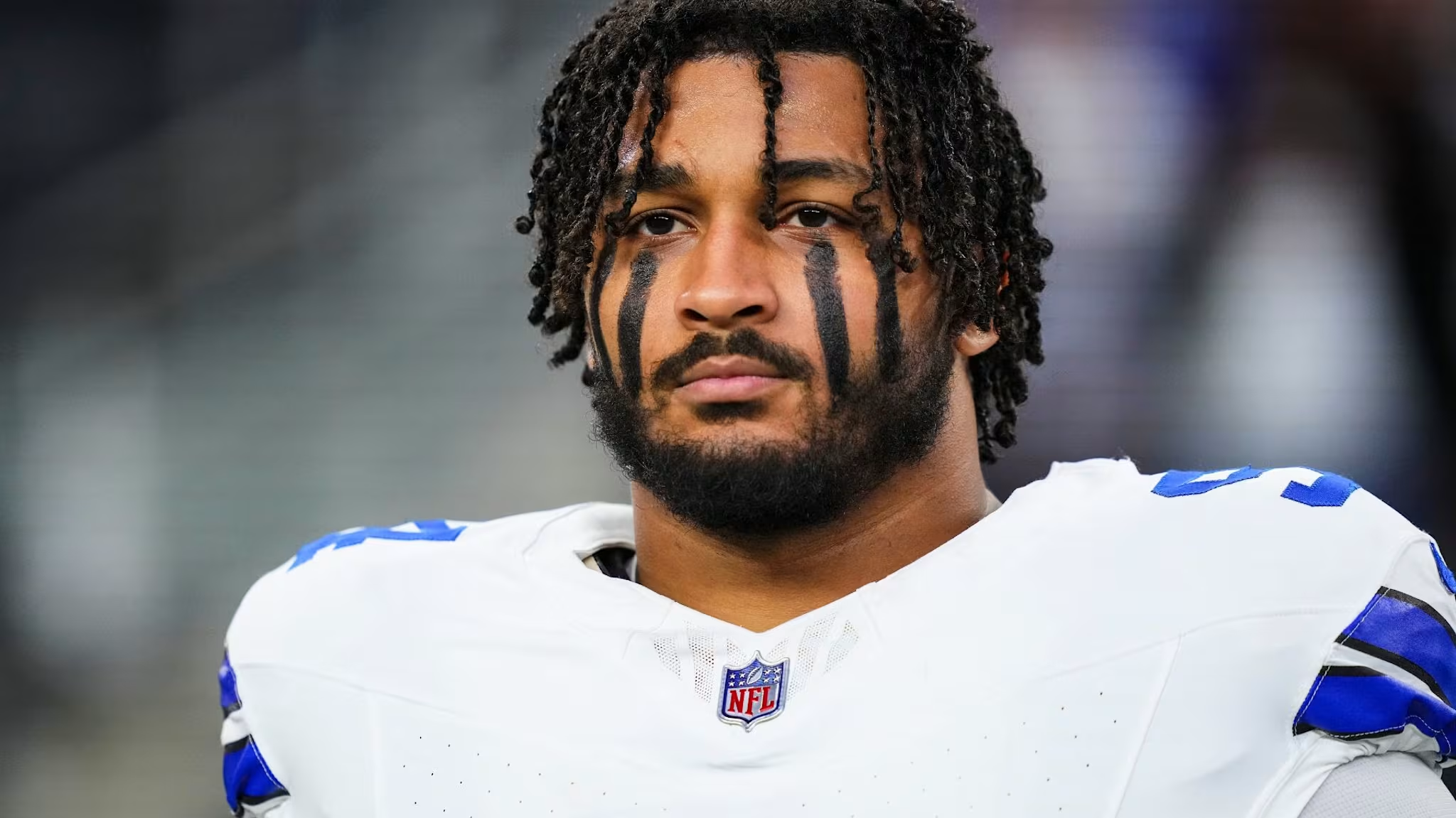
Nearly eight months after Marshawn Kneeland died at age 24, doctors have uncovered another piece of his story. Researchers at the Boston University CTE Center announced on Tuesday, July 7, that the former Dallas Cowboys pass rusher had Stage 1 chronic traumatic encephalopathy (CTE), a degenerative brain disease linked to repeated head impacts.
CTE cannot be diagnosed while a person is alive. Physicians can evaluate symptoms and rule out other neurological conditions, but confirmation requires a post-mortem examination of brain tissue under a microscope. According to the Cleveland Clinic, early-stage CTE can be associated with symptoms including depression, headaches, mild aggression, short-term memory problems, and changes in behavior.
For Kneeland's longtime girlfriend, Catalina Mancera, the findings brought a measure of clarity, even if they couldn't change the outcome. "While this diagnosis does not change the tragedy of his passing, it provides important context about some of the struggles he may have been facing," she said in a statement after the results were released.
Still, the foundation urged caution around that context, noting that suicide is complex and the diagnosis should not be treated as the cause of Kneeland’s death.
The findings prompted a broader warning from experts studying the disease. Dr. Ann McKee, director of the Boston University CTE Center, told TMZ she was "not surprised" by the findings, noting that researchers have identified CTE in nearly half of the athletes under 30 whose brains have been examined.
Chris Nowinski, CEO of the Concussion & CTE Foundation, pointed to Kneeland's case as evidence that advances in equipment and league policies have not eliminated the risk. "Mr. Kneeland played in the modern era of concussion protocols and better helmets, and yet he still developed CTE," Nowinski said to TMZ, adding, "Concussion protocols do not prevent CTE, because CTE is caused by repeated head impacts, not just concussions."
Kneeland's death in November 2025 stunned the NFL. Authorities said he died from an apparent self-inflicted gunshot wound after a police pursuit in North Texas. Dispatch audio later revealed that Mancera had contacted authorities out of concern for his mental health, warning that he was armed and feared he might take his own life.
Family members had also alerted police after receiving a goodbye text message. The tragedy unfolded just two days after Kneeland scored the first touchdown of his NFL career.
During that same period, Mancera publicly shared another life-changing update, revealing she was pregnant with the couple's child. The couple’s son, Makhai, was born on June 11, 2026.
If you or someone you know is struggling with thoughts of self-harm or suicidal ideation, help is available. Call or text 988 or visit 988lifeline.org to connect with a trained crisis counselor 24 hours a day, seven days a week.