Key Takeaways
- This oral history traces how Lil Peep’s 2016 mixtape Crybaby fused emo samples, trap drums, and vulnerable songwriting into a blueprint for a new generation of rap.
- Lil Tracy, Nedarb, and other collaborators recall chaotic shared houses, Peep’s layered GarageBand vocals, and spontaneous sessions that produced songs like “White Tee.”
- Nearly a dozen friends and collaborators chart the project’s SoundCloud breakthrough, its posthumous streaming release, and the lasting influence Peep never lived to witness.
Gustav “Gus” Åhr eventually became a legend, but he started out like many artists of his generation: a kid in his bedroom, finding like-minded people on the internet.
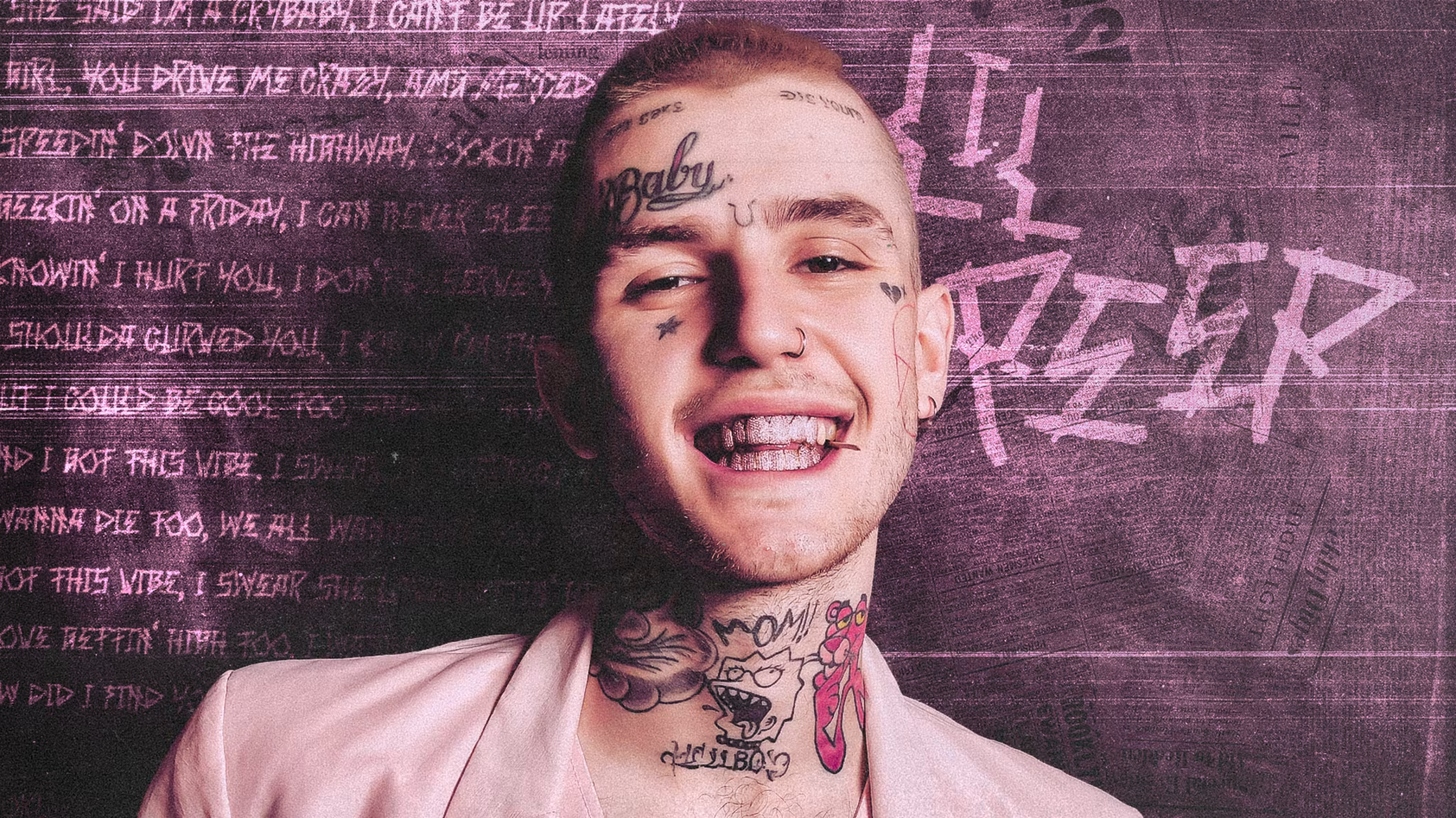
As a teenager, Åhr began making music under the less-than-stellar moniker of “Trap Goose.” It was relatively standard rap for the time, bereft of the melodic touches that would make him famous, but with a taste for the trap drums that would follow him throughout his career. However, a move to Los Angeles after high school changed everything. He found a new sound, and a new name: Lil Peep.
Events happened very quickly. In just two years, he went from complete obscurity to releasing a string of classic, genre-redefining mixtapes. And then, before he could fully find his footing in the mainstream, he was dead.
Peep’s rise coincided with the emergence of SoundCloud rap, a movement that—initially out of necessity—bypassed traditional music industry channels. Armed with little more than a laptop and an internet connection, artists could release music directly to fans, distributors and sample clearances be damned.
Peep’s music—and model-like good looks—got him notice in the underground when he started putting out music regularly in 2015. But it was with 2016’s Crybaby, released on SoundCloud on June 10 of that year, that things really took off.
Crybaby is where Peep hit on something unique. The record’s mix of unforgettable melodies, lyrics that put you directly inside his 19-year-old head, and beats that made the then-nearly-unpredecedented decision to combine emo guitars (often ripped from bands like Brand New, Modest Mouse, and Postal Service) with trap drums struck a chord, and set the stage for his move to the mainstream.
So did his personality. The Lil Peep of Crybaby was far from the boastful, invulnerable Superman of most rap records at the time. He was a self-proclaimed “crybaby” and wounded lover who was open about how he needed to “run away from the pain.” Rather than bragging about his expensive clothes, it was, “Two weeks and I still got the same old jeans on.”
There was some boastfulness too, to be sure: “Born in the ‘burbs, but I’m big in the hood,” he rapped on “Falling 4 Me.” But for the most part, the lead character in his songs was sad, lovelorn, and often high on drugs—not a far cry from the protagonists of the emo bands sampled for the record’s beats.
Crybaby set Peep on the track to stardom, thus clearing the way for the XXXTENTACIONs, Post Malones, and Kid Larois who would follow in his face-tattooed wake thematically and musically. But beyond its lasting impact, Crybaby deserves to be remembered as one of the most influential albums of 2016, what is now recognized as one of the greatest modern day rap years.
We talked to almost a dozen people who were around for the making of Crybaby. Here’s what they remember about the album, its aftermath, and its legacy.
——
Cast of Characters (in order of appearance):
Brennan Savage: Childhood friend of Peep’s who was his roommate during the making of Crybaby. Musician.
Nedarb: Producer, “White Tee.”
Lederrick: Producer, “Cry Baby,” “Ghost Girl,” “Falling 4 Me.”
Ghostemane: Peep’s roommate during the making of Crybaby. Musician.
Lil Tracy: Featured artist, “White Tee.”
Cian: Producer, “Lil Jeep.”
Charlie Shuffler: Producer, “Yesterday,” “Big City Blues.”
Justin Staple: Director of the Peep-featuring documentary American Rap Star, former music journalist at Noisey.
Horse Head: Co-producer, “Falling 4 Me.”
Joe LaPorta: Veteran mastering engineer who mastered Crybaby for its official release in 2020.
Lou Miceli Jr.: Musician and designer who laid out the artwork for the physical release of Crybaby in 2023.
Part I: Before Crybaby
The origins of Crybaby came out of some major changes. Lil Peep moved back and forth across the country, making an extended stop in the Mile High City. In changing his location, he also changed his sound, discovering an artistic approach that would flower during the album he was about to create: bringing in long stretches of melody and guitar-heavy beats.
Brennan Savage: This was maybe 2014 or 2015. I was living in Pasadena at a house that me and Gus originally moved into right when we graduated high school. My mom had to cosign on the house for us originally because two 17, 18-year-old kids with tattoos were not getting that house. We moved together to go to Glendale Community College, and Gus already had a vision in his mind that he wanted to make music.
He fucking hated college. He was telling his mom, “Yeah, I'm going to class.” He wasn't. We got in an argument at one point because I was like, “If you're not going to go to class and shit and your mom's going to be pissed off and not help pay the rent, I don't know what the fuck we're going to do.”
If you knew Gus, he was the most passionate, stubborn motherfucker on the whole planet. So he was like, “I'm going to just go back to New York, and figure this shit out.” Obviously, it broke my heart a little bit just because I could see the frustration in him, and there's nothing I could really do to help him. I saw what he wanted to do, but he wasn't really sure how to approach it yet.
So then he went back to New York and just locked in, got his own mic, and just sat in that fucking bedroom forever and really found his sound. He eventually posted it online, and it was the most incredible stuff I've ever heard. The first song I think he ever really, really released was “Star Shopping.” When I heard “Star Shopping” for the first time, I cried.
Nedarb: I ended up meeting him because I used to do vocals as well, but I wasn't too good at it. But there was an artist in that SoundCloud, emo rap type world. His name was [YungJZAisDead]. He had a song that had Peep on it, and he wanted me to add a verse to it. So I first heard him from that song, “Apparition Love.” It reminded me of stuff I was producing for GothBoiClique, which had already been a group since 2014.
From there, we started communicating on Twitter in the DMs. He was already a pretty big fan of mine through producing for people in GothBoi, like Horse Head. He saw that I had produced for Xavier Wulf and Black Kray, all these people, so he was already pretty hip to me. We started talking a lot, and then we started making our California Girls EP, which was the precursor to Crybaby.
Lederrick: I was a waiter in Denver and I was throwing shows at this punk warehouse space called Rhinoceropolis. Peep hit me up online and was like, "Yo, can I come do a show there?" And I was like, "Yeah, for sure." I loved his music. This was when his biggest song was "Beamer Boy." I sucked at the time. I wouldn't say I was a good producer at all. But I guess he saw my capability to do it.
Brennan Savage: Gus was staying in Denver at the beginning of this whole period. We were trying to get him back out to LA because we felt like he was getting into some bad stuff. We were like, “He doesn't even sound like himself on the phone.” We finally got him up on a plane. Gus invited Lederrick and Young Goth from Denver.
Lederrick: When he got back from Denver, he was ready to take his career to the next level and really lock in. He was like, "I'm gonna make the best project that I've made, and this is gonna be my sound."
Brennan Savage: When Gus got back, it all changed, because everyone was like, let's just all live together in this house. And I was like, “Fuck it, let's go.”
Part II: Pasadena Nights
A future who’s-who of SoundCloud rap gathered at the house in Pasadena.
As you might expect, things were often chaotic. With close to a dozen artists living under one roof, people slept on the floor, smoked weed, and chugged Carlo Rossi wine. But amid all the chaos, there was a constant stream of creativity.
Brennan Savage: There's I think at one point seven people living at my house [laughs]. Nedarb, Ghostemane, [Lil] Tracy, Craig Xen, Kill Station, Omen[XIII]—a bunch of people that are pretty recognized in music.
Ghostemane: I was working a phone sales job [in Florida] at the time. They were very strict and very not cool with me going away to California. But I was like, “Look, I gotta do this. I gotta break away for a month or so and try to make something happen.”
Brennan Savage: It was in a neighborhood where most of the neighbors were Christian missionaries. It was a very small house. There was a small living room when you walked in, with a dirty carpet. There was one small bedroom in the back that was Gus's room, and then there was a slightly bigger one to the left that had backyard access—that was the one I was staying in. There was a tiny backyard where me and Gus were trying to grow these weed plants that failed very badly. There was a garage where we would hang out a lot. Me and Gus actually built a ladder to go onto the roof of the garage. That's where the “Gym Class” video was shot.
Ghostemane: We were right at the base of this mountain. We'd go up there and hike sometimes. It was next to this other house that had a chicken coop, and we'd always go on the roof and you could see the chickens.
Lederrick: I wouldn’t say we were doing like a ton of crazy hard drugs or anything. We were mostly just smoking weed.
Sometimes this guy would bring cocaine over. This dude would always be the plug. We found him face-down outside the house like a block down one day. I think that was the last time he ever came over.
Nedarb: I never really smoked weed, but it was them smoking blunts and bongs all day long. It was before the super-heavy drug use, so it was very pure. It was partying, drinking, and smoking, like you would imagine any 18 to 22 year old kid’s life is.
Brennan Savage: We would buy a freaking plastic bottle of vodka from Vons and drink and smoke weed and laugh and watch movies. Just classic shit. It was very, very natural. Me and Gus were obsessed with watching American Pickers. It's this show where they go to abandoned garages and try to find antiques to resell. Me and Gus really loved to watch that.
Part III: The Making of Crybaby
The actual making of Crybaby was Peep’s vision through and through. He had a unique way of recording: penning his verses and hooks in mere minutes, and laying them down almost as quickly. Many people involved remember that he was devoted to a set of templates he had in his GarageBand software, which he combined with a very particular way of multi-tracking his own voice.
Because everyone involved thought this music would only ever end up on SoundCloud, the idea of getting permission for samples never entered the conversation. So producers ended up taking chunks from very popular rock and emo songs: Oasis’ top 10 hit “Wonderwall,” Postal Service’s debut single “Such Great Heights,” and even a track from the biggest of all rock bands, Radiohead.
Brennan Savage: If I'm not mistaken, the first song that formed the project Crybaby was “White Tee.” That was when Tracy came over. The first day they met, they just hit it off, and then they recorded it and shot the video the next day.
Lil Tracy: I already knew all of them anyway. So I was just going over there sometimes and would just hang out with them. I stayed for a few days, but then I’d go out, do my own things, then we would maybe do a show. It was just free for all back then, just doing whatever.
Nedarb: I remember I had a DJ set in Oakland, and that's where I seen Tracy. He was living in LA too, but he got booked for the show, and then he was like, “I need a ride back to LA.” So we drove back down and I was like, well, I'm just going to take you to where I've been staying. He's like, “I gotta crash somewhere tonight. I don't know where I'm gonna go.” So that's how he met everybody.
Lil Tracy: I lived in LA anyway, but me and Nedarb did a show in Oakland, and then we drove back. I forget why, but we went over there and I met Peep. And then within 10 minutes of meeting him, we made “White Tee.”
At that point, I knew he did music. He knew I did music. We talked maybe for like two or three minutes, and then he was like, "Bro, let's just make a song." I was like, "Bet." And then we just made it. We didn't really think about it that much. He just kind of said his part. I wrote the first four bars and then I just punched in the rest. It was a quick process. I didn't think it would be like a huge song like that.
Nedarb: I didn't make it on the spot. I had made that beat a few months prior when I was in New York City, just visiting friends. It actually was for somebody originally. Her name is Bootychaaain. She's who I was staying with in New York when I was in New York in early 2016. The original title is, “I Saw an Old Witch Lady Get Ate Out at a Rave in New York City.” That actually happened.
I'd made it for her, but her music then was very turned up. Maybe she just didn't think it would fit. She never really gave me an answer. I was like, all right, I'm gonna just keep it pushing. So then I gave it to those guys.
The crazy thing is, the original beat is on my Bandcamp, and the original one has synths and stuff on it at the end. They ended up just recording basically two hooks and then copy and pasting it. They copy and pasted the whole song—not just the vocals. So it cuts out a lot of the beat.
He used GarageBand and he would never set the tempos correctly. So if you notice, in the middle when there's a cut, if you had a metronome going the whole time, it will get off when the second part kicks in. There was times in his songs where as he copy and pasted it, the second part would be off a little bit, but it still sounded cool. I don't know why he did that.
Lederrick: A lot of the songs on Crybaby have this structure where it's two hooks, with a breakdown half-hook. He had these anthemic hooks, and that's why his songs are so memorable, because the way he wrote music was a hook followed by one verse, and then it was another hook.
Cian: I was just getting out of high school and trying to do music full time. Fat Nick, I was sending him beats at that time. He grouped us into an iMessage conversation and said, "Hey, man, you should work with Peep." At that point, I hadn't known about him or his music at all. I just fired a pack over randomly. I didn’t know how big of an opportunity it was. I sent the first email on Thursday, May 26, 2016. The literal beat name is just “12 December 17th.” I was naming them numbers at the time.
I was learning how to find samples. The sample ended up being “Two People” by Jacques Siroul. I pitched it down initially and then I just found some chops I liked. And then the part where the sample goes a bit higher, it basically was an accident. I pressed the button to pitch it up 12 [semi-tones], but it time-stretched it times two, so it sounded really tight and it lined up perfectly.
Lederrick: When it came to Cian P, that was the song that made the project cohesive. When Peep made that “Lil Jeep” song, I think that's when he was like, OK, I have something here. We had made songs together, and that was obviously cohesive, but it wasn't varied enough.
Charlie Shuffler: I was living with my mom still. I was 19 or 20 years old. I had just started producing—hence the Oasis “Wonderwall” sample [on “Yesterday”], which is kind of out of pocket. I had no clue if he liked Oasis or not.
I was spamming Peep with beats, and that’s how “Big City Blues” and “Yesterday” came about. I made those with him in mind. I just really fucked with his shit—this weird genre-bending rap/rock/emo, whatever you wanna call it. No one was calling it emo rap at the time, ‘cause it was just so brand new.
For “Yesterday,” I just wanted the bass to be loud as fuck. I use Ableton now, but at the time I was using Logic, and I was still learning. I was trying to figure out how to make my 808s be loud and hit. That was the thought process behind the drums: "How can I make these 808s loud over this Oasis sample and make it sound hard?"
Justin Staple: That was Charlie and their game plan: let's flip some of these really memorable songs, whether it's Postal Service [sampled on “White Tee”], Oasis, with SoundCloud rap-style drums.
Nedarb: To be honest, he didn't know any of the samples I was doing for him. Tracy knew Postal Service, but I can't say whether or not Peep did.
Brennan Savage: He was a music encyclopedia, but it's not like he knew every single one of these bands that were sampled. I'm not sure if he was aware of Postal Service and certain shit like that. But Brand New and all that other shit, he knew what was up.
Lederrick: When we made the Radiohead “Climbing Up the Walls” sample [for “Falling 4 Me”], he told me, “Sample this Radiohead track.”
A lot of the songs I sampled on Crybaby were songs I grew up with. Like “In The Annexe,” Boards of Canada [sampled on “Ghost Girl”]. That was such an impactful song in my life. That was something I was obsessed with in high school, that Boards of Canada album Geogaddi. I wasn't just sampling random shit that I found online.
Justin Staple: I'm a little older than these kids. I was around for a lot of the Midwest emo actual Postal Service/Death Cab era. So having them sample that kind of music would obviously be the entry point. People hearing the Postal Service for eight bars at the top and then the hard hitting 808 that aren't really mixed in, but they're the crunchy 808s—no one had made music like that at that time. I think there's going to be a whole generation that are only going to recognize those melodies and samples from the Peep songs.
Ghostemane: We're all from punk and hardcore. Gus, more from a mixed background. He loved rap, but he definitely listened to Taking Back Sunday, My Chemical Romance, Fall Out Boy, and all the Third Wave emo stuff. We were just like, “We like the sound. These are the bands we love, and we want to do our spin on it and pay tribute to them.”
Lederrick: It was always chaos. There was always a ton of people around, and Peep would have to go into a closet or some shit to lay down his vocals. There would be people yelling, people partying. But when we made that shit, we were able to go into Brennan's bedroom and close the door. We would just sit on a mattress. He would sit on like a fucking plastic chair and put a sock over the microphone and record that shit. It was very bare bones.
Ghostemane: We never sat down and scheduled the time to work. Working was all we did while we weren't going to each other's shows or going to get food. It was just like, Gus is in Brennan's room working, we’re in the living room. Or Gus is in the living room. Or we're all in the living room working with headphones on. Gus actually blew my [Beats by Dre] headphones and then bought me a new pair because he was listening to his music so loud.
Nedarb: All he cared about was making shit. He was recording 24 hours, all the time. He was just recording, recording, recording. Never really met anyone that recorded as much as that dude.
Lederrick: He would always downplay his own capabilities as far as mixing and production. He'd be like, ‘’Oh, I have no clue what I'm doing, I just press random buttons.’ And it's like, no you don't. He was so good at mixing. He had this style of mixing where he would record—I haven't seen other people do this—but he would record eight to 10 layers. He would pan certain layers to each side. I don't wanna give away too much of his sauce, but I mean, it doesn't matter at this point.
He would do a range in the volumes. He would do a really loud take further away from the mic, a more soft take with more timbre in his voice closer to the mic. The takes that were far away from the mic, he would wash them in a bunch of reverb. He was very good at dialing in a mix style and sound that nobody has yet to recreate. Countless people have tried to copy his sound, but none of them have been able to recreate it in the way he did it.
Ghostemane: He did a million layers on his voice. He's kind of the reason why I started doing even more layers on my voice. That was part of being in that environment, is we would pick little tips and tricks off of each other.
Lederrick: He would maybe take 20 minutes max to write these hit songs that have hundreds of millions of plays now. He would just hear the beat, he would write some profound-ass shit to it off the top of his head, come up with amazing melodies and flows very quickly—like super second nature.
He wasn't sitting there with a pen for hours, trying different melodies. It was always damn near the first thing he would fucking record, the first thing he'd write. By the time he got up to the mic, he knew exactly what he was gonna say.
Ghostemane: He wrote fast. He already knew what he wanted to say. I don't think he had this, “I'm going to write a song about blank.” He’d let it flow and afterwards come up with a name or something.
Brennan Savage: The first half of Crybaby was made at that house [in Pasadena]. We got evicted. I mean, we didn't get technically evicted on paper. But I remember one day the landlord was like, “Hey, there's other Christian missionaries that want to move in here, so you guys have to leave.” So then me and Craig Xen went out on a mission and put on our best button-up tees and went house shopping. We finally found a house in Whittier. And the rest of Crybaby, I believe, was made there.
Ghostemane: I went back to Florida and I was sitting there watching Instagram. Watching them have fun, mess with each other, draw on each other when they're sleeping and stupid stuff like that, and I'm sitting here at my desk making phone calls. I was, like, dude, screw this—I'm going to take whatever money I have and move permanently. Fortunately for me at that time, something happened with the Pasadena house, with the landlord. Brennan was like, “Yo, we're moving to Whittier. You can have a room. Pay me $400 a month rent”—which was as much as I could afford at the time. That became the new Pasadena house, basically. It was bigger, so it was nice. Horse Head ended up moving in and it became another little creative spot for the next year or so.
Lil Tracy: That one was cool. It was bigger [than the Pasadena house], had a bunch of rooms.
Part IV: The release of Crybaby
Crybaby was posted to SoundCloud on June 10, 2016. Peep felt so strongly about it that, while it was being created, he got the project’s name tattooed on his forehead—a move that was still unusual at the time, and that people close to him admit had no small effect on the album getting noticed.
Almost immediately, fans of underground rap began to realize Crybaby was something special. Peep and his friends watched as the amount of plays on the service blew past their expectations. Within six months, Pitchfork would dub him “The future of emo.”
Nedarb: It was big immediately.
Charlie Shuffler: In my eyes, it felt like the whole world was talking about it. I remember when “Yesterday” and “Big City Blues” got 100,000 plays on SoundCloud, I thought I made it.
Lil Tracy: I just remember the numbers going up crazy, and we were all like, "What the fuck?” [laughs] And that was dope to see. I mean, on SoundCloud, like 100K [plays] was pretty top tier back then. But he was getting like 300K and shit. We were like, "Whoa!”
Brennan Savage: I could see how overwhelming it was for him, because he was a really shy kid. But he knew. He was like, "This is going to be a different thing." Everyone else knew too. They were like, "Holy shit."
Horse Head: I remember he was rising in fame or whatever you want to call it pretty fast once that came out.
Ghostemane: I knew this project was going to be something special. I didn't know the magnitude. Everyone was starting to get the Crybaby tattoos with the little bird, and people were going nuts about it. The fans, at least. It still felt very underground, though, obviously. I mean, there wasn't much press.
Justin Staple: No one was taking him seriously around me. The way he looks, it was just coming across as mall goth-corny to a lot of the OG hardcore guys who were used to ASAP Rocky and Tyler, the Creator, which is more like Vans and Supreme. Peep never got any good press.
Lederrick: Crybaby played a huge role in his career. He started taking off like crazy. The recognition he got from it, he started doing big shows. He got signed to his label. Travis Mills heard “Ghost Girl” and he was like, I need to sign this dude.
Ghostemane: Gus started touring. He ended up getting a place with Nedarb on Skid Row. I ended up moving to Koreatown. Everyone was popping off in their own way, doing their own thing. And no love lost, obviously. I think everybody didn't realize how much it was going to blow up for everyone.
Justin Staple: It was an 800 square foot empty loft on Skid Row with four mattresses and all the GothBoiClique guys recording in there.
Brennan Savage: The loft was kind of a party place, so then a lot of people started coming around.
Lederrick: We were kids. We had no credit, no fucking income, no work history and shit, so the only apartment we could get was in Skid Row in the loft. It was me, Nedarb, and Peep that were on the lease. But then as soon as we moved there, that's when everything changed. It feels like the music kind of took a back seat. I didn't produce anything on Hell Boy because I was just too fucking surrounded by chaos that I couldn't really lock into like the energy I had locked into in Pasadena.
It was other people that were just showing up. A lot of people didn't have anything to bring to the creative side of shit. So they were like, “How can I interject myself into this? Oh, I'll just offer everyone a bunch of drugs for free.” And that was their way in. There was all these people showing up, handing piles of drugs to basically like 19-year-old, 20-year-old kids. “If I get everyone hooked on drugs, maybe they'll want me around,” you know? At that time I was pretty fucking broke. I remember people offering me a bunch of cocaine and Xanax and no food. I was starving. I was down to a pack of ramen noodles, but people were offering me grams of cocaine.
Part V: The Legacy of Crybaby
Lil Peep never lived to see the true impact of Crybaby. He died while on tour in November, 2017 from an accidental drug overdose. He was 21. Several years later, his estate, led by his mother Liza, began the process of getting Crybaby on streaming services—which required clearing samples, something that wasn’t done for the SoundCloud release. The project made it to DSPs in 2020, and physical copies were put out in 2023.
A decade since Crybaby, and nine years since his death, Peep’s legacy continues. This fall, a tribute tour to commemorate what would have been the rapper’s 30th birthday—put on by, among others, producer Charlie Shuffler—is playing to sold-out houses in the United States and Europe.
The influence of Crybaby, and of Peep himself, can be seen throughout the music scene from the late 2010s all the way to today. SoundCloud rap became a whole covered-by-the-New-York-Times genre with its own superstars, most notably XXXTENTACION and Juice WRLD. But Lil Peep’s footprint went far beyond that.
Post Malone, who said that Peep’s music “changed the world,” became a superstar using a familiar-seeming template of mixing rock influences with trap drums, with face tattoos sprinkled in. It’s not a long leap, likewise, from Peep’s Brand New and Radiohead samples to Playboi Carti’s declaration that he’s a “rockstar.” Carti, like Post, paid tribute to Peep on his passing. “Openly emotional, melodic, rock-influenced rap made by a heavily tattooed, genre-agnostic young man” describes almost every new successful rap act today. Gustav Åhr still casts a long shadow, and Crybaby is the sun that makes it reflect.
Lederrick: Initially I was involved in stuff [putting the album on streaming], but I told his mom, I don't want to be involved because I don't want to think about this shit. I get why because for his mom and his family, they want to keep his name and his legacy alive. But for me, [his death] is the worst thing that ever happened to me, the most traumatic moment of my life.
Brennan Savage: His music being released on streaming platforms is beautiful. I love that, but the real impact was when it was actually released [on SoundCloud]. One thing about it being on streaming platforms that I'm so glad about is that it's actually certified. I don't even want to know how many plaques he has at his mom's house. That's amazing. Unfortunately, he never got to see one of those motherfucking plaques, which is heartbreaking.
Joe LaPorta: One of the first things he ever had mastered was the Come Over When You're Sober record that I did. His mom was always happy with my work, and she just wanted me to kind of preserve the integrity and everything that the fans were already used to hearing, but finding ways to sweeten it and accentuate things and for it to translate on streaming nicely while still keeping the vibe and the energy of everything that he was doing. It's been a really cool experience for me.
It was a funny one for me, too. When he sampled Postal Service on “White Tee,” I actually had mastered the original Postal Service song—I had done the remaster that he likely sampled it from. So it was kind of like double mastering. That also happened on the title track: he sampled an early Brand New song that I had worked on. So that was cool to see.
Lou Miceli Jr. I think that one may have been one of the first projects we worked on [for Peep]. I did the vinyl layout creation for it. I was told, "Hey, here's the assets for the project. Here's the bird. See what you can do to make a layout with this minimal stuff that we have.” And that's what I did. Having something tangible that fans can have in their hands to hold rather than just streaming music on some sort of streaming platform really means a lot.
Horse Head: I think Radiohead didn't want to clear the sample. So I'm pretty sure if you listen to the one that's on Spotify now, it's not even the same beat. I think they had someone remake it to avoid the copyright. My attitude was kind of like, fuck Radiohead. I guess at least the song's out there, but I am kind of bummed that my contribution isn't like a part of it. Me and a lot of the other guys that came up in this genre, we don't sample anymore, because we learned our lesson.
Charlie Shuffler: We were just putting shit on SoundCloud, so you were able to get away with that stuff. I had no thoughts about clearing those records at all. That was not even in my rhetoric.
Ghostemane: Sampling was part of the SoundCloud culture back then. We never knew anything about clearing samples or any of that stuff.
Charlie Shuffler: For “Big City Blues,” the sample came from this guy, I believe he's Russian. He plays guitar, and I found him on—this is how new I was—this website called Looperman. I had to hit him up directly through that weird loop website, because he didn’t have any socials. It was actually kind of crazy, ‘cause when we went to clear the record, it was hard to get in contact with him.
Justin Staple: Peep had such a good reputation for being so nice that [Liza] was able to get these cleared in a real way for Crybaby. Liza was a big part of positioning it for those artists so that they could understand: Gus's music is helping young people the same way your records were helping young people when they came out, whether it's Postal Service or Isaac Brock [from Modest Mouse, who are sampled on “Nineteen”].
Charlie Shuffler: I still can’t believe that [Oasis] shit got cleared.
Nedarb: I like to make music that will last longer than I will. Things that are art that will live forever. So I think it's doing what it's supposed to be doing.
Lil Tracy: I’m glad I'm a part of it, honestly. The music is timeless. It doesn’t go out of style. We were all best friends, and that's how the music came out that good, because we knew each other that well. It would just be so easy. It didn't even feel like we were working.
Lederrick: Ever since he passed away, I don't even make that style of beats anymore. I'm not gonna recreate that shit with somebody else. Once he died, my sound died with him.
I appreciate that I was a part of his journey. That's probably the coolest shit I'll ever do in my life. I could produce a fucking tape for Kanye West tomorrow, and it would still not be nearly as important to me as the shit I did with Peep.
Ghostemane: He was a good dude. He was an honest, fun-loving kid. I think all of it hit him and hit all of us really so fast. I'm always going to miss him.
Charlie Shuffler: I'm very, very proud of it. Those are some big songs that have affected lives. I'm proud of that era, proud of all my friends from that era. And I think it's very special that whether it was on purpose or it was an accident or a little bit of both, all of us collectively helped shape a new genre. I’m very proud of those moments.
Brennan Savage: His music's only going to grow for the rest of eternity. I mean, he's one of those guys. In my opinion, he's top 10 most influential musicians of all history.
I just want people to know how great of a person Gus was and how happy he would be to see the amount of support he's received. And I really wish that he was around to see even a quarter of the support that he's gotten over all these years. I know when people say, “Oh yeah, this guy was a good person.” No, he was literally the best person in the world. Anyone who got the chance to meet him would tell you the same thing. I'm absolutely honored to be his friend.